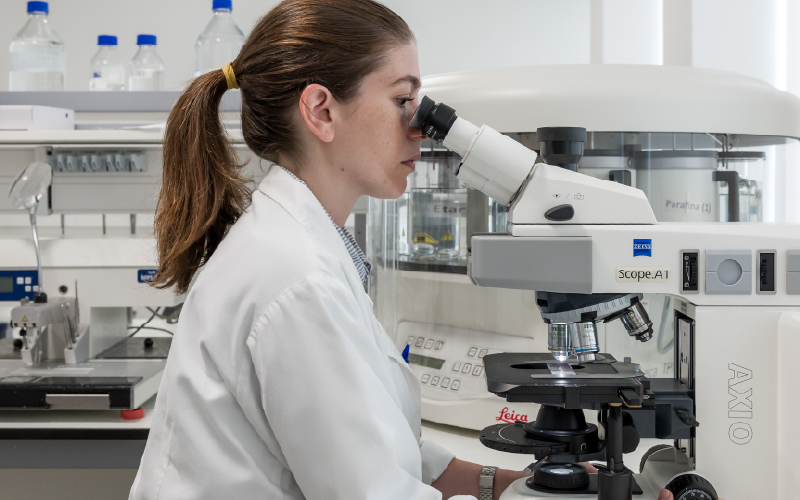
At a time when food systems are facing growing challenges relating to resource scarcity, environmental pressure and the need to feed a growing global population, innovation plays a crucial role. It is against this backdrop that the PEPTI9 initiative – Bioactive and Innovative Proteins and Peptides for Sustainable Nutrition – has been launched, promoted by Biorbis in partnership with the Portuguese Catholic University and co-funded by COMPETE 2030, with the aim of developing new nutritional solutions from underutilised biomass.
As Diogo Figueira, Business and Partnerships Manager at Biorbis, explains, “Against a backdrop of growing pressure on natural resources, rising global demand for protein and the need to reduce the environmental impact of food production, the PEPTI9 project proposes an innovative approach: transforming yeast from the beer, wine and ethanol industries into bioactive ingredients with high added value.”
Science and collaboration in the service of innovation
PEPTI9 stems from the convergence of scientific knowledge, technological capability and market vision. The collaboration between Biorbis and the Portuguese Catholic University seeks to address a specific need: to find protein sources that are more sustainable, functional and aligned with current human and animal nutrition requirements.
In the words of Diogo Figueira, “PEPTI9 is the result of a collaboration between the biotechnology company Biorbis and the Portuguese Catholic University (UCP), and stems from the urgent need to find new sources of protein that are more sustainable, more functional and that address specific challenges in human and animal nutrition.”
Support from COMPETE 2030 plays a decisive role in realising this ambition. As Diogo Figueira notes, “This project has the support of COMPETE 2030, which enables the consortium to bring together the necessary resources to tackle these challenges with a highly specialised, competent team that understands the market and is focused on the objectives. At a technical level, the project brings together teams coordinated by Professor Manuela Pintado, director of CBQF-UCP, and Dr Raquel Madureira, General Manager of Biorbis.”
This combination of academic knowledge and business experience strengthens the consortium’s ability to accelerate innovation and transform scientific research into concrete solutions with market applications.
New ingredients with high functional potential
At the heart of the project is the development of new technologies that enable better utilisation of yeast components to create more effective ingredients for nutrition. The aim is to obtain compounds that are more easily digested by the body, have more palatable characteristics and offer greater potential to deliver tangible benefits for human and animal health.
As Diogo Figueira explains, “Through these enzymatic hydrolysis processes, we aim to obtain ingredients rich in peptides, amino acids, glucans and other bioactive compounds that can improve digestibility, enhance important biological functions and contribute to more effective and sustainable nutritional formulations for the human and animal nutrition markets.”
In addition to the laboratory component, the project incorporates bioinformatics and artificial intelligence tools to accelerate the identification of peptides with specific bioactivity, thereby reducing costs and shortening development cycles.
Applications in animal and human nutrition
The PEPTI9 project encompasses practical applications in strategic sectors. In animal nutrition, the focus is on developing functional ingredients for aquaculture – notably for prawns and tilapia – as well as for dog food, with a view to partially replacing protein sources with a greater environmental impact.
In the field of human nutrition, the research aims to develop food supplements with tangible benefits for health and wellbeing. As Diogo Figueira points out, “the aim is to identify and validate bioactive peptides capable of interacting with biological mechanisms associated with the gut-brain axis, inflammatory modulation and sleep regulation”.
An investment with structural impact
More than just a research project, PEPTI9 represents a strategic commitment to the valorisation of industrial by-products and the creation of solutions with significant economic and environmental potential.
According to Diogo Figueira, “The project’s impact therefore extends far beyond the laboratory.” This vision translates into the creation of knowledge, intellectual property and the foundations for future products with an international reach.
The grant awarded was instrumental in this development. As the head of Biorbis emphasises, “This grant enabled Biorbis and UCP to move forward with a more ambitious research and development plan.”
By combining science, sustainability and applied innovation, PEPTI9 stands as a concrete example of how investment in R&D can contribute to food systems that are more resilient and better prepared for the challenges of the future.
With the support of COMPETE 2030, Hotel M’AR De AR Muralhas is reinventing its guest experience to provide higher-quality, more innovative and sustainable hospitality.